

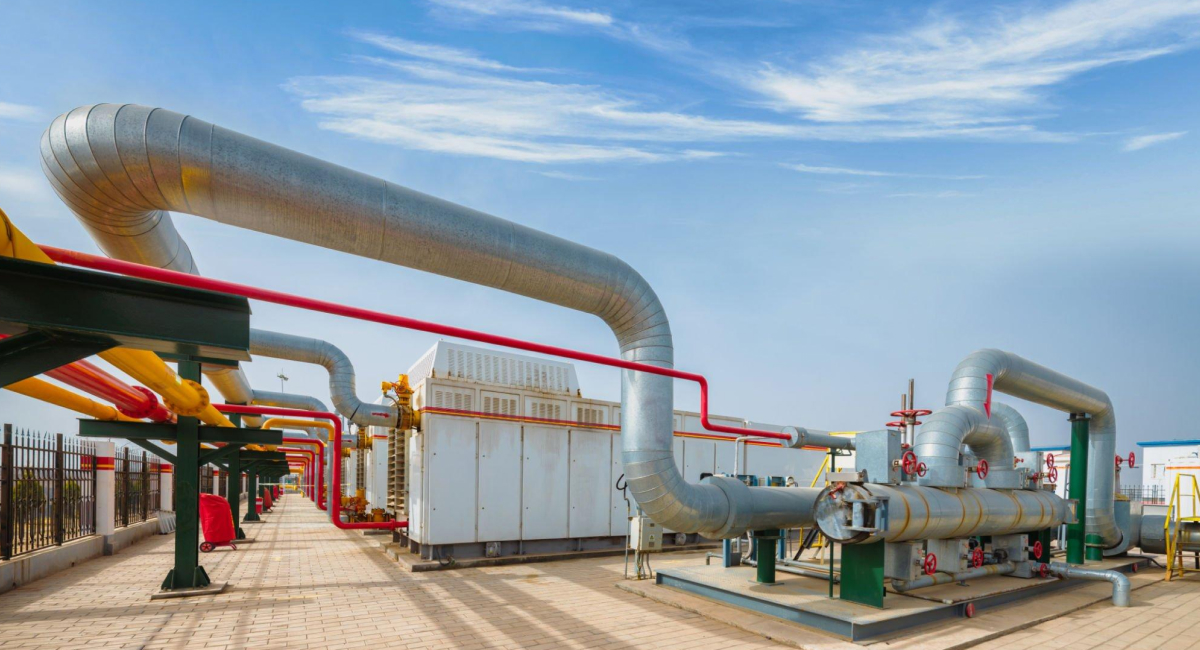
Fundamental Challenges Facing the Global LPG Market
Executive Summary
The global liquefied petroleum gas (LPG) market entered March 2026 under exceptional stress. A sharp disruption to shipping through the Strait of Hormuz exposed a structural weakness in a market that has become highly international, yet remains dependent on a limited number of producing regions, export terminals and maritime corridors.
In 2025, 30% of global seaborne LPG exports transited the Strait of Hormuz. In March 2026, LPG exports through the strait fell by around 80%, from an average 1.5 million barrels per day in 2025 to about 0.3 million barrels per day. The shock was therefore not simply regional: it affected Asian supply security, global replacement economics, shipping demand and the allocation of alternative Atlantic Basin cargoes.
The central conclusion of this Market Insight is that LPG security can no longer be assessed only in terms of commodity availability and price. Supply-source diversification, storage, terminal flexibility, vessel availability, contractual optionality and access to timely market intelligence are becoming integral components of resilience.
Key Market Signals
| Indicator | Market signal |
| Hormuz exposure | 30% of global seaborne LPG exports transited the strait in 2025. |
| March 2026 disruption | Exports through Hormuz fell by around 80% versus the 2025 average. |
| U.S. balancing role | U.S. propane exports averaged 1.813 million b/d in 2025. |
| Human impact | Around 3.4 billion people in developing economies use LPG as their primary cooking fuel. |
| India exposure | Around two-thirds of LPG consumed in India in 2025 transited Hormuz. |
1. A Globally Connected Market with Concentrated Supply
LPG sits at the intersection of household energy, industrial consumption and petrochemical feedstock demand. Propane and butane are widely used for cooking and heating, while petrochemical consumers use LPG as a feedstock for propylene, ethylene and other products.
The international market has benefited from a major expansion of U.S. natural gas liquids production. U.S. propane exports rose from 1.262 million b/d in 2020 to 1.813 million b/d in 2025, reinforcing the United States as a major source of incremental global supply.
Figure 1. U.S. propane exports, 2020–2025. Source: U.S. Energy Information Administration (EIA), Petroleum Supply Monthly.
Growth in U.S. exports has improved global supply diversity, but it has not removed concentration risk. The Middle East remains a major supplier to Asian markets, while U.S. export infrastructure is itself concentrated heavily on the Gulf Coast. The global system is therefore diversified by origin, but still dependent on a relatively small number of high-capacity export corridors.
2. The Strait of Hormuz: LPG’s Underappreciated Chokepoint
The Strait of Hormuz is normally discussed through the lens of crude oil and LNG. The 2026 disruption demonstrated that LPG exposure is also strategically significant.
IEA analysis indicates that 30% of all seaborne LPG exports transited the Strait of Hormuz in 2025. Almost all Middle Eastern LPG exported that year was delivered to Asia, linking a geographically narrow chokepoint to large residential and petrochemical demand centres.
Figure 2. Share of global seaborne LPG exports transiting the Strait of Hormuz in 2025. Source: International Energy Agency (IEA), based on Kpler data.
3. From Regional Disruption to Global Supply Shock
The scale of the March disruption was immediate. LPG exports through Hormuz fell from an average of approximately 1.5 million b/d in 2025 to about 0.3 million b/d in March 2026 – a decline of around 80%.
Figure 3. Average daily LPG exports through the Strait of Hormuz: 2025 average versus March 2026. Source: International Energy Agency (IEA).
A physical interruption of this magnitude forces buyers to compete for replacement molecules from other regions. That competition is transmitted through cargo premiums, freight, vessel availability, voyage duration and terminal scheduling. In an interconnected LPG market, the impact therefore extends beyond the countries directly dependent on Gulf supply.
4. Asia’s Exposure: LPG as an Energy-Security Commodity
The implications are particularly significant in developing Asia, where LPG is not merely a traded hydrocarbon but an essential household fuel. The IEA estimates that around 3.4 billion people across the developing world use LPG as their primary cooking fuel, including almost 2.4 billion people in developing Asia.
India and Indonesia illustrate the social dimension of supply security. The IEA reports that around 80% of Indian households and 90% of Indonesian households rely on LPG for cooking. In India, around two-thirds of LPG consumed in 2025 transited the Strait of Hormuz.
This changes the nature of the risk. A prolonged disruption is capable of moving rapidly from a commodity-market issue to a household energy-security issue, particularly where import dependence is high and storage buffers are limited.
5. The United States as a Balancing Supplier – with Limits
The United States has become increasingly important to global LPG balancing. EIA data show that U.S. propane exports reached 1.813 million b/d in 2025, while total U.S. natural gas plant liquids exports reached 3.1 million b/d. U.S. normal butane exports also reached a record of nearly 535,000 b/d in 2025.
However, alternative production does not automatically equal immediately deliverable supply. Replacement cargoes remain constrained by export terminal slots, VLGC availability, longer voyages to Asia, freight economics and receiving-terminal compatibility. The relevant measure of resilience is therefore not only how much LPG exists globally, but how quickly it can be redirected and physically delivered.
6. Five Fundamental Challenges
01 | Supply concentration
A substantial share of internationally traded LPG originates from a limited number of producing regions and export systems.
02 | Strategic chokepoints
High-volume maritime corridors can transmit regional geopolitical events directly into global physical markets.
03 | Infrastructure rigidity
Export terminals, receiving terminals, storage and vessel availability limit the speed at which trade flows can be rebalanced.
04 | Import-dependent demand
For major Asian economies, LPG is tied directly to household energy security as well as industrial and petrochemical consumption.
05 | Price and freight volatility
Physical disruption can be amplified by replacement premiums, longer voyage economics and competition for vessels and cargoes.
7. Strategic Implications
The events of 2026 strengthen the case for a broader definition of LPG supply security. Importers and market participants should increasingly evaluate resilience across the full delivery chain rather than focusing solely on benchmark price.
- Diversify supply origins and avoid excessive dependence on a single export corridor.
- Maintain sufficient storage and inventory buffers for critical end-use markets.
- Develop terminal flexibility across vessel sizes, product mixes and alternative origins.
- Build contractual optionality into origin, loading window, volume and logistics provisions.
- Integrate freight, vessel availability and terminal constraints into procurement decisions.
- Strengthen market intelligence so that geopolitical and physical-market signals are incorporated earlier into commercial decisions.
Outlook
The LPG market is likely to remain globally connected but structurally exposed. U.S. export growth provides an important balancing mechanism, yet the March 2026 shock shows that additional supply cannot instantly compensate for the loss of a major trade corridor.
For producers, importers, traders and governments, the emerging priority is resilience: diversified supply, stronger logistics networks, greater storage flexibility and commercial structures capable of adapting to rapidly changing conditions.
The key question for the next phase of global LPG trade is therefore not simply whether sufficient product exists. It is whether the market has sufficient flexibility to move that product reliably to where it is needed.
Sources & Data Notes
- International Energy Agency (IEA), “Energy crisis threatens world’s most vulnerable as cooking fuel shortages grow,” 2026. Used for Hormuz share, March 2026 export-flow disruption, clean-cooking exposure and India/Indonesia context.
- S. Energy Information Administration (EIA), Petroleum Supply Monthly / Propane Exports, annual data through 2025. Used for U.S. propane export series.
- S. Energy Information Administration (EIA), “Natural gas plant liquids exports reached record highs in 2025,” 30 March 2026. Used for NGPL and butane export context.
- Argus Media, “LPG Market Outlook: Impact of Iran War, March 2026.” Used as supplementary market context on physical availability and Asian market response.
Publication Note
This publication is prepared by Black Swan Global – Market Intelligence & Insights as general market commentary. It is intended to support discussion of international energy-market developments and does not constitute investment, financial, legal, trading or other professional advice. Data are drawn from publicly available sources considered reliable; Black Swan Global does not warrant that all information is complete or error-free. Market conditions can change rapidly.